
Crews: Shared Team Tip Pages That Work

 Maya Patel
In most hospitality settings, the service experience is a collective achievement. The host who greets you at the door, the server who takes your order and reads the table accurately, the runner who delivers food from a hot kitchen to a cold pass at pace, the bartender who makes your drinks while simultaneously keeping track of six other orders — all of these people contribute to whether the evening is good. The conventional model of tipping the server attributes the entire credit for that collective experience to one person, which is both economically unfair to the others and a somewhat distorted picture of how excellent service actually works.
Tip pooling and crew tip arrangements exist to address this. The principle is straightforward: rather than directing tips to individuals, customers tip a team, and the team distributes according to an agreed formula. In practice, making this work fairly and transparently has always been the challenge. Manual pool management is administratively burdensome, prone to disputes, and fundamentally reliant on honesty about the total amounts involved. Digital crew tip pages solve most of these problems by making the whole process automatic and visible.
How Crew Tip Pages Work

A crew tip page is a shared tipping destination — a URL or QR code associated with a specific team rather than an individual. When a customer tips via the crew page, the platform receives the payment and distributes it among the crew members according to pre-configured rules. The distribution logic can be as simple as equal shares or as nuanced as the venue requires: weighted by role, by hours worked in a shift, by seniority, or by any combination the team agrees on.
Each member of the crew has their own account on the platform and receives their share directly to their payout method — not via the employer's payroll, not via a manager with a spreadsheet. The distribution happens automatically, typically within minutes of the tip being received. Every crew member can see in their own account what tips came into the pool and what their share was. There is no waiting, no trusting, and no asking.
Tippidy's crew feature supports exactly this model. A restaurant can set up a front-of-house crew page for the floor team, a separate crew for a combined front-of-house and kitchen pool if that is their policy, and individual pages for staff who also receive personal tips from regulars. These structures can coexist, and tips can flow through whichever channel the customer chooses or the venue directs them to.
Designing a Split That the Team Actually Believes In
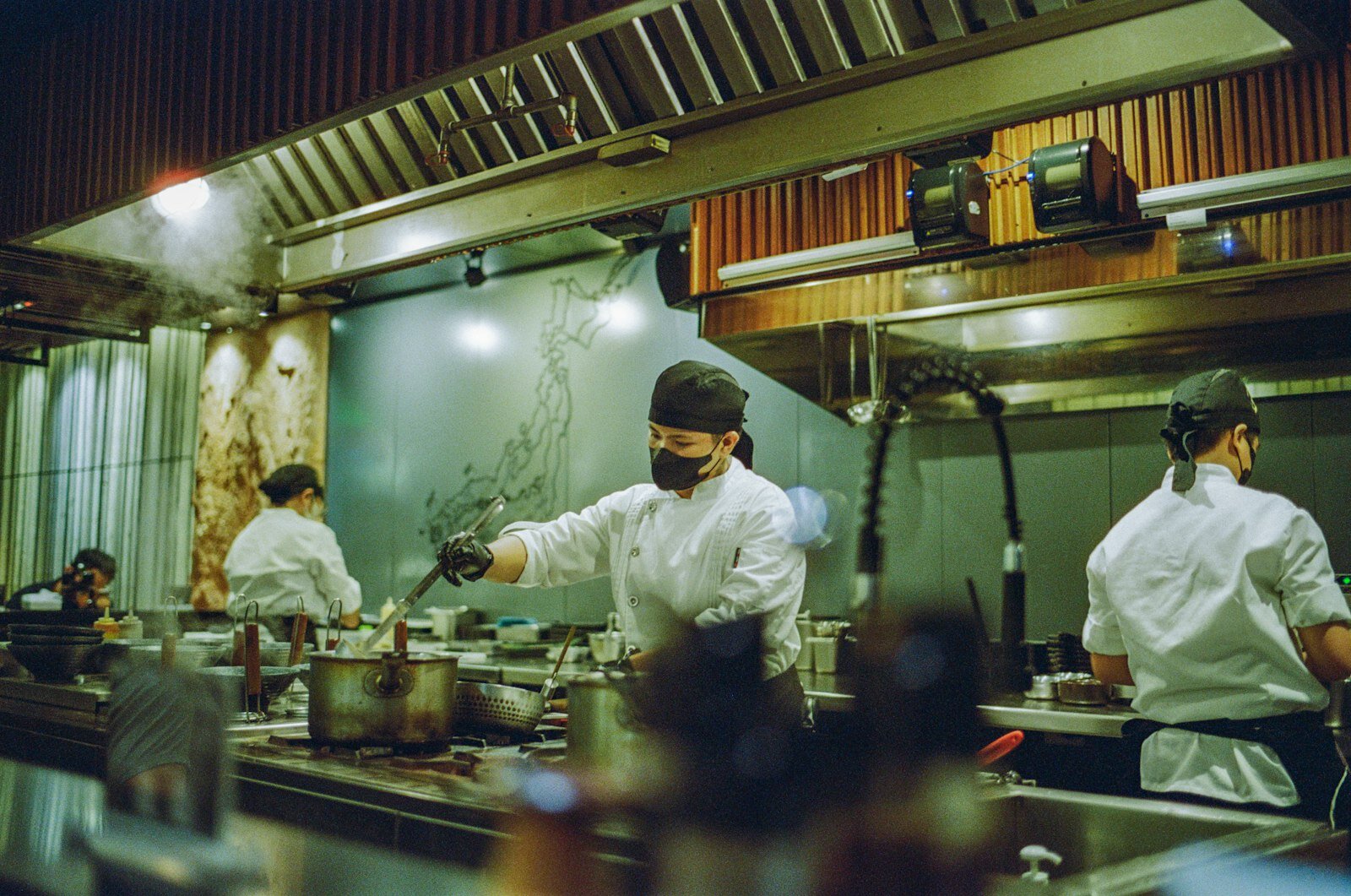
T he technical capability to configure any split ratio is only useful if the split reflects the team's genuine sense of fairness. Getting to that agreement — particularly in venues with established cultures and strong opinions — requires a conversation rather than a managerial declaration. Teams that are involved in designing their own pool arrangement are far more likely to feel that it is fair, even when the outcome for any individual is the same as one imposed from above.
Common models in UK hospitality include: full equal share (every shift worker, regardless of role, gets the same proportion); role-weighted shares (servers at full weight, runners and barbacks at sixty or seventy per cent, kitchen at fifty per cent, depending on the venue's view of their contribution to the tip-earning experience); and hours-based shares (each worker's allocation is proportional to the hours they worked during the tipping period). Each model has trade-offs. Equal share is simple and promotes team unity but may not reflect the reality of customer-facing contribution. Role weighting is more granular but requires ongoing maintenance as roles evolve. Hours-based is arguably the most defensible but requires accurate timekeeping records.
Whatever model is chosen, it should be documented in the written tipping policy that the Employment (Allocation of Tips) Act 2023 requires. This policy should be shared with all staff, not just posted somewhere in the back office. The transparency requirement of the Act is best met by proactive communication, not technically-compliant concealment.
Including Kitchen Staff: The Honest Conversation
One of the most contentious questions in tip pooling is whether kitchen staff should be included. The argument for inclusion is that food quality is a significant driver of tipping, that kitchen workers often work as hard as or harder than front-of-house, and that the bifurcation of a "tipped" and "untipped" tier within the same team creates morale problems and a culture of "us and them." The argument against is that customers are explicitly tipping the person who served them at the table, and that redirecting a portion of that to people the customer never interacted with changes the nature of the transaction.
There is no universally correct answer here. Some of the best-run kitchens in the UK are included in tip pools and feel genuinely valued as a result. Others maintain separate structures, with kitchen staff compensated differently through enhanced base pay or bonuses. What matters is that the decision is made consciously, communicated clearly, and not used as a mechanism to reduce front-of-house earnings while the business captures savings elsewhere.
The Act is relevant here: workers who "ordinarily interact with customers" must be included in the tipping policy, but the requirement does not specify that kitchen staff who do not interact with customers must be included in tip pools. This gives operators genuine flexibility, provided the policy is explicit about what they have decided and why.
Multiple Crews for Different Venues or Shifts
Operators running multiple venues, or venues with meaningfully different shift compositions (a lunch crew and a dinner crew with different staffing), can benefit from structuring tip pages at that level of granularity. A Sunday brunch crew at a city-centre bar is a different group of people with different tip patterns from the Saturday evening crew — combining them into a single weekly pool may benefit some workers at the expense of others in ways that do not reflect the work done.
Digital platforms that support multiple crew configurations per operator make this straightforward. A venue can maintain separate crew pages for different shifts or sub-teams, with workers belonging to whichever crews cover their patterns. Tips flow to the relevant pool, distribution happens automatically, and the accounting is clean. Workers move between crews without administrative overhead. The system reflects the reality of how hospitality staffing actually works, rather than forcing the messy reality of shift patterns into an artificially simplified pool structure.
What Customers Experience at the Other End
It is worth considering the customer experience of a crew tip page versus an individual tip prompt. For many customers, tipping a team feels more natural in a team-service context — it does not require them to single out one person in a setting where multiple people contributed to their experience. The crew page can be presented as "Leave a thank-you for the team at [Venue]" — which requires no decision about who specifically to acknowledge and no worry about leaving someone out.
QR codes at the table, on menus, or on receipt folders can link directly to the crew page. A brief note — "Tips go directly to our team" — signals that the crew page is a genuine worker benefit rather than a business revenue line. Customers who understand where their tip goes are more likely to leave one. Transparency at the customer-facing touchpoint, not just in the internal policy, is part of what makes a crew tipping system trustworthy rather than merely compliant.
The best crew tip arrangements — those that genuinely improve team morale, reduce disputes, and produce the right financial outcomes for workers — are ones where the configuration reflects reality, the communication is honest, and the technology works invisibly in the background. When all three are true, the system earns its own trust rather than requiring it to be granted on faith.
Tento článok je súčasťou nášho kompletný sprievodca digitálnym prepitným — zistite, ako prijímať prepitné kartou, Apple Pay alebo Google Pay.
Komentáre (0)
Prihlásiť sa pre pridanie komentára.
Súvisiace príspevky



Začnite prijímať digitálne prepitné ešte dnes
Vytvorte si bezplatnú stránku prepitného Tippidy, pridajte ju do Apple Wallet a Google Wallet a nechajte hostí dávať vám prepitné za sekundy cez Apple Pay, Google Pay alebo kartou — bez aplikácie, okamžité výplaty.
Funguje s Apple Wallet a Google Wallet · Žiadne mesačné poplatky