
Tipping Delivery Riders and Couriers
 Maya Patel
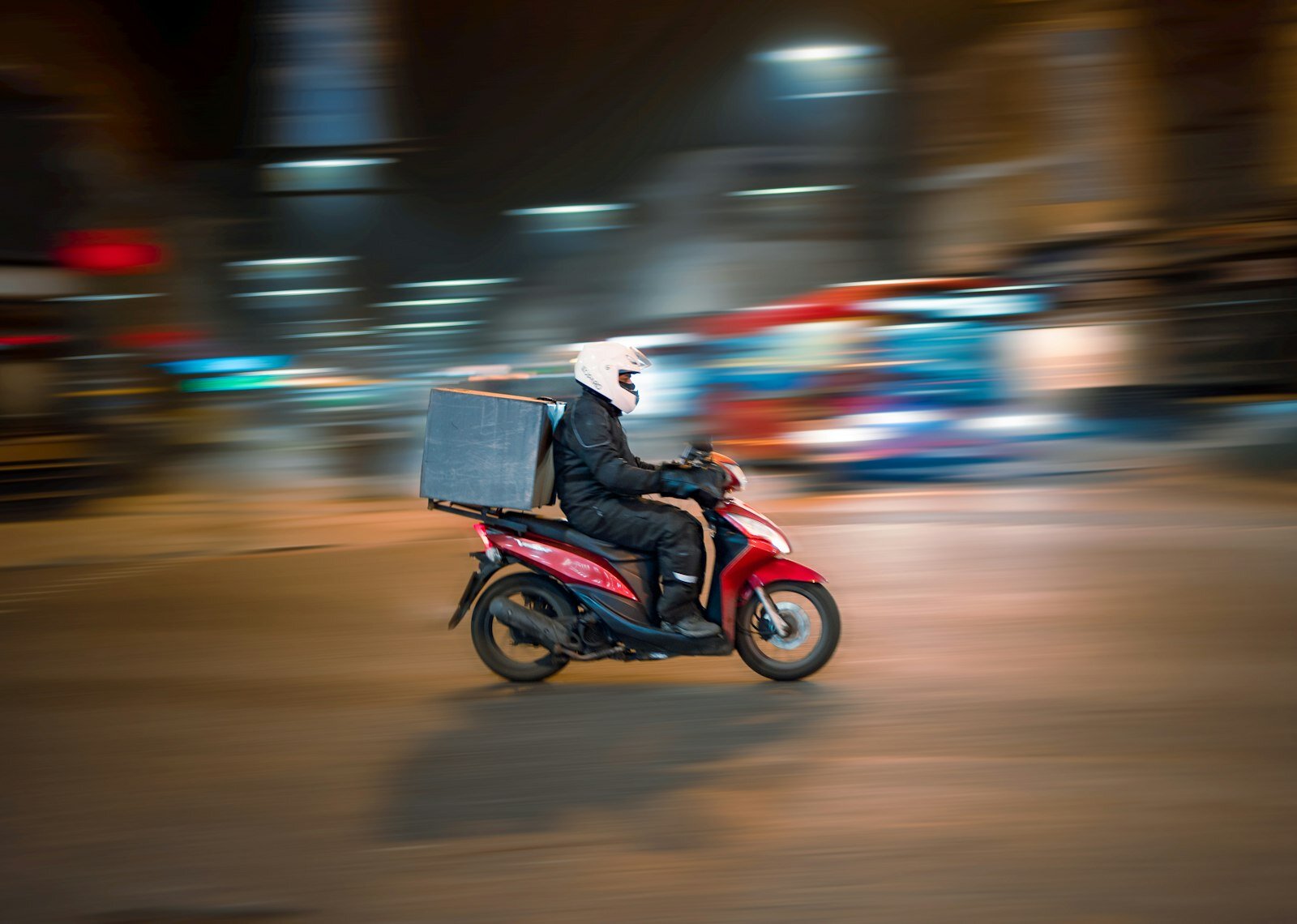
On a cold Thursday evening in November, a delivery rider navigates wet streets on a bicycle, balancing a thermally insulated bag on their back, racing against an estimated arrival time set by an algorithm that has not accounted for the roadworks on the high street. They arrive, hand over a bag of food to a customer who barely looks up from their phone, and immediately accept the next order. The customer has already reviewed the restaurant. The rider may receive a rating. Whether they receive a tip is a matter of which platform they work on and whether the customer notices the option.
Delivery riders are among the more financially precarious members of the UK workforce. Many work as independent contractors for major platforms, which means they bear their own costs — bike maintenance, fuel, phone data, waterproofs, insurance — and have no access to sick pay, holiday pay, or employer pension contributions. Tips, for many, are not supplemental income. They are meaningful income that helps cover the weeks when work is slow or weather is unworkable.
How Major Platforms Handle Tipping Today

The major food delivery platforms have varying approaches to tipping, and their practices have shifted over time, often in response to public pressure. Most now offer an in-app tipping option, typically presented after delivery, with percentage buttons or a custom entry field. The critical question — one that has generated significant controversy — is whether 100% of the tip reaches the rider, or whether the platform takes a commission on it.
Several major platforms have faced public criticism and regulatory scrutiny for taking a cut of rider tips or for factoring tip amounts into rider pay calculations in ways that effectively offset them against base pay. In the latter model, a tip from a customer does not increase the rider's earnings — it reduces what the platform pays per delivery instead. UK riders' organisations and journalists exposed this practice in high-profile cases that prompted platform policy changes, but the opacity of pay structures makes ongoing verification difficult.
For riders who work on platforms where tipping is available and transparent, in-app tips can be meaningful. For those working on platforms with less favourable structures, or those doing B2B courier work where no in-app mechanism exists, alternative tipping routes matter.
Contractor Status and the Tax Question

Most delivery riders in the UK are classified as self-employed or "worker" status for platform engagement purposes — a classification that has been the subject of significant litigation, most notably the 2021 Supreme Court ruling in Uber BV v Aslam, which determined that Uber drivers were workers, not independent contractors, and therefore entitled to minimum wage, holiday pay, and pension. The implications for delivery riders are ongoing and contested.
For tax purposes, tips received by a self-employed or contractor rider are business income and should be declared in their Self Assessment return. This applies regardless of whether the tip comes through an in-app mechanism, via cash, or via a separate digital tipping platform. HMRC treats all income connected to trading activity as taxable, and the channel through which it is received does not change this. Riders who receive meaningful tip income should maintain records and ensure their tax return reflects total earnings accurately.
The interaction between worker status, platform commission structures, and tip income is an area of genuine complexity. Riders who are uncertain about their tax obligations — particularly those earning above the trading allowance threshold — should seek advice from an accountant familiar with gig economy income.
The Case for Platform-Independent Tipping
A delivery rider who has regular customers — perhaps doing grocery deliveries for a subscription service, or making consistent drops to the same office blocks — can benefit from a personal tip page that operates independently of any platform. A QR code on the delivery bag, a sticker on the bike, or a short URL on a business card gives customers who want to express appreciation a route that does not depend on the platform's own mechanisms.
This approach has particular value for riders doing B2B deliveries, medical courier work, or any delivery context where the recipient builds a relationship with the same rider over time and the in-app tipping option either does not exist or is not prominently offered. A personal tip page is a rider's own financial infrastructure, independent of any platform's decisions about commission or payout timing.
For riders using Tippidy, setting up a personal page takes minutes and generates an instant payout when a tip is received. In a working context where earnings can vary dramatically day to day, the speed of payout — rather than waiting for a weekly or biweekly platform settlement — is a material benefit.
Safety, Weather, and the Real Cost of the Job
It is worth naming clearly what delivery riders are dealing with. Urban cycling in traffic is objectively dangerous — riders are involved in collisions at a rate that reflects both the volume of time they spend on road and the pressure of the time targets set by dispatch algorithms. In bad weather — rain, ice, fog — conditions worsen significantly. The decision to keep riding through a storm is often not a free one; it is driven by financial necessity and the awareness that accepting jobs is how earnings happen.
Customers who order delivery in difficult conditions and consider the circumstances are, anecdotally, more likely to tip generously when they have a convenient mechanism to do so. The problem has historically been that the mechanism — cash, or a clunky in-app interface presented before the food has even arrived — has not served either party well. Post-delivery prompts with a simple interface, or a QR code on the bag that can be scanned at leisure after the food is eaten, match the actual moment when gratitude is felt.
What Fair Tipping Looks Like for Riders
There is no established norm for delivery rider tipping in the UK equivalent to the restaurant expectation. Ten to fifteen per cent is a common starting point for people who do tip, but the framing that makes most sense is probably simpler than a percentage: was this delivery prompt, was the order correct, and was the rider professional? If yes, a tip somewhere in the range of one to three pounds on a typical order is a reasonable expression of that appreciation.
The broader question is structural. As gig economy law evolves and platforms face continued pressure to improve rider pay and conditions, tipping should be seen as a supplement to fair pay rather than a substitute for it. A platform that offers riders good earnings and transparent tipping on top is genuinely different from one that uses tips to offset base pay and calls the combination acceptable. Customers who care about the people delivering their food have good reason to understand which situation they are in — and to use tipping accordingly.
Ta članek je del naše celovit vodič za digitalne napitnine — izve, kako prejemati napitnine s kartico, Apple Pay ali Google Pay.
Komentarji (0)
Prijavi se za objavo komentarja.
Sorodne objave


Začni prejemati digitalne napitnine še danes
Ustvari brezplačno Tippidy stran za napitnine, jo dodaj v Apple Wallet in Google Wallet ter sprejemaj napitnine v sekundah prek Apple Pay, Google Pay ali katere koli kartice — brez aplikacije, takojšnja izplačila.
Deluje z Apple Wallet in Google Wallet · Brez mesečnih naročnin