
Cashless Tipping and the Decline of Cash

There was a time when finishing a shift in hospitality meant counting a small pile of notes and coins, sorting out the kitchen share, and walking home with something tangible in your pocket. That picture has been changing for years, and the change has accelerated sharply in the past decade. Contactless cards, mobile wallets, and app-based payments have displaced cash from the everyday transactions that once generated a steady stream of small-denomination notes into tip jars and waitstaff pockets. The decline of cash is not a problem that tipped workers caused — but they are among the people who feel it most directly.
How Cash Use Has Actually Changed

The trajectory is clear even without reaching for specific statistics. Bank branch closures, the removal of ATMs from petrol station forecourts, and the near-universal adoption of contactless payment at point of sale have all contributed to a situation in which many people genuinely carry no cash as a matter of routine. The pandemic period accelerated this trend significantly, as contactless limits were raised and businesses actively discouraged cash handling. Whilst cash use has recovered somewhat since then, the underlying direction remains firmly downward. For tipped workers, this creates a structural problem: a customer who wants to tip but carries no cash is effectively unable to do so unless an alternative mechanism exists.
The consequences are unevenly distributed. Workers in high-end restaurants, where the bill is large enough to include a service charge on the card receipt, have long had a digital tipping mechanism — albeit one controlled by the employer. Workers in lower-margin settings — cafés, barbershops, market stalls, van delivery services — are more likely to have relied on ad-hoc cash tips from customers, and they are the ones most exposed to the cash decline. For a barista in a busy city-centre coffee shop, the gap between the income they would have received in a cash-carrying era and the income they receive today from customers who simply can't tip because they don't have coins is real money, lost with no ill will on anyone's part.
Why Cashless Doesn't Mean Tipless

The key insight — and it's one that the digital tipping industry has been built on — is that the desire to tip has not declined alongside cash use. Customers who have a positive experience still feel gratitude, still want to express it, and in many cases feel a degree of frustration or guilt when they cannot. The problem is not attitudinal; it is infrastructural. When the infrastructure changes, the behaviour follows. Studies in markets where digital tipping has become the norm show that overall tip rates can be maintained or even increased when a frictionless mechanism is provided. The limiting factor was never customer willingness; it was the absence of a tool.
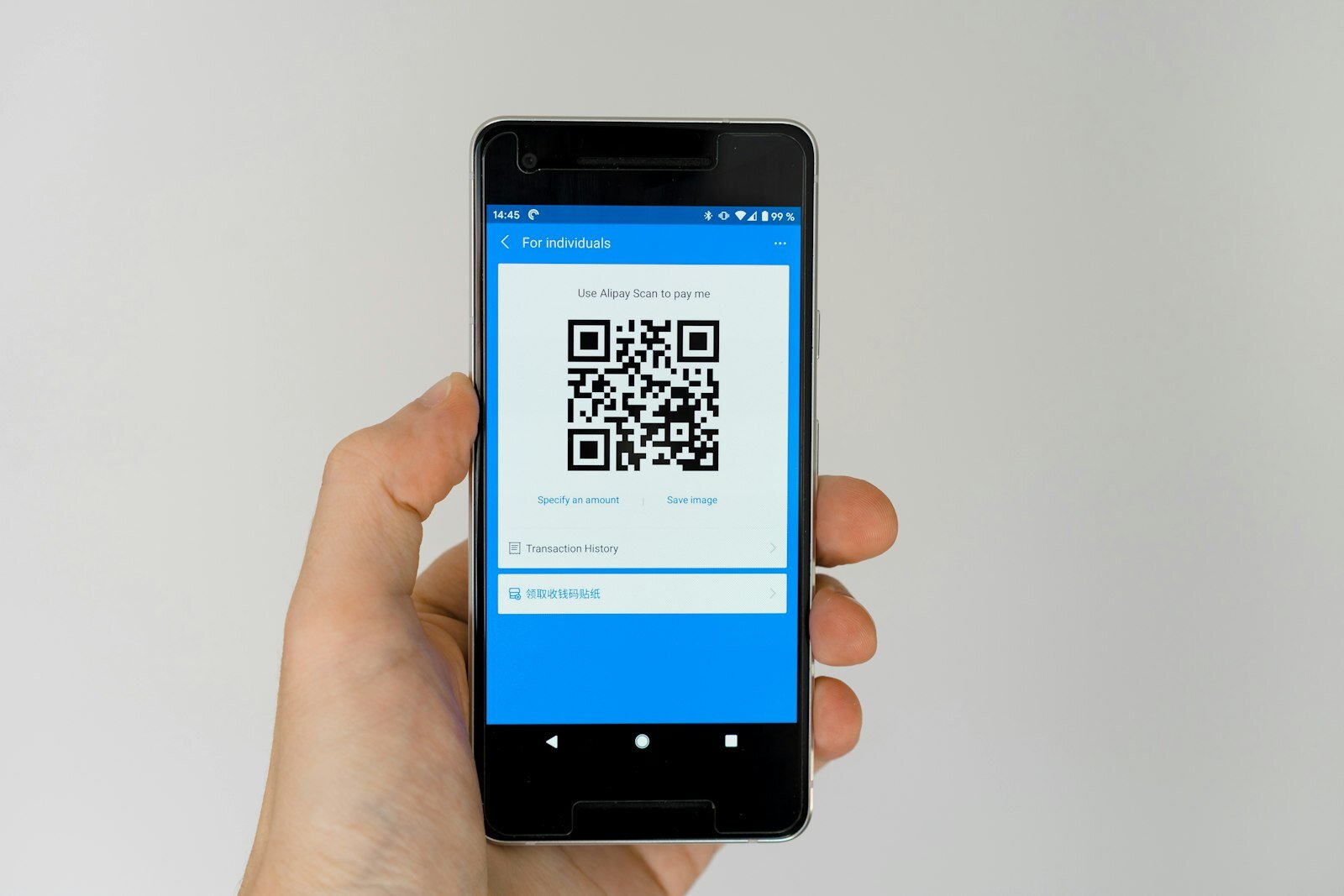
This is why QR codes on tables, links in digital receipts, NFC tap points next to the card terminal, and personal tip pages have all grown in parallel with the decline of cash. They are not innovations for their own sake — they are responses to a genuine unmet need. A café that installs a QR code tip jar at the counter is not trying to pressure customers into tipping; it is simply providing the mechanism that allows customers to act on an impulse that the disappearance of small change has otherwise made impossible to fulfil.
The Emotional Economics of Tipping Without Cash
There is something worth examining in the psychology of cashless tipping that goes beyond the purely practical. Cash tips have a physical immediacy: the note changes hands, there is eye contact, the transaction is complete. Digital tips involve a small but real amount of friction — unlocking a phone, scanning something, entering a payment. Behavioural economics research on what's known as the "pain of paying" suggests that digital payments feel less concrete than cash, which can cut both ways for tipping. On one hand, the reduced tangibility of money in digital form can make people more willing to spend; on the other, the additional steps involved in a voluntary tip (as opposed to a card payment at a till) create a moment of deliberation that doesn't exist when you drop a coin into a jar.
Platforms that minimise this friction — pre-saved payment details, one-tap tip amounts, Apple Pay and Google Pay integration — see meaningfully better conversion than those that require customers to type in card numbers. The design of the tipping interface matters as much as its existence. A tip page that loads slowly, looks untrustworthy, or requires too many steps will be abandoned by customers who had every intention of using it. The best digital tipping solutions treat this as a product design problem, not just a payment infrastructure problem.
What This Means for Tipped Workers Today
For workers who rely on gratuities, the practical response to the decline of cash is to proactively provide a cashless alternative rather than hoping customers will find their own way. This means having a QR code or personal link readily available, mentioning it naturally without pressure, and ensuring it works seamlessly on both iOS and Android. The workers who have adapted most successfully to the cashless shift are those who treat their tip page the same way they treat their professional appearance — as part of the basic infrastructure of doing the job.
There is also a social dimension worth acknowledging. In industries where workers depend on tips, the expectation that customers will carry cash has always been a quiet burden placed on the customer as well as the worker. Digital tipping normalises the tip without requiring either party to carry out an awkward dance around who has change and in what denominations. The transaction becomes cleaner and, arguably, more honest: the customer pays what they feel the service is worth, through a mechanism that feels as natural as any other payment.
The Employment (Allocation of Tips) Act 2023 in Context
The decline of cash in tipping has a regulatory dimension too. When tips were predominantly cash, they were largely invisible to employers and to HMRC — workers received them directly, spent them, and the tax position, whilst technically clear, was practically murky. As tipping has moved onto digital rails, it has become more visible: payment processors generate records, employers receive tip amounts as part of their card takings, and the audit trail that cash obscured is now plainly available.
The Employment (Allocation of Tips) Act 2023 is partly a response to this visibility. Parliament has acknowledged that digital tips frequently pass through employer hands before reaching workers, and that this creates an obvious opportunity for deductions, delays, and unfair allocation. The Act requires employers to pass tips to workers without deduction, to maintain a written tipping policy, to distribute tips fairly using a clear allocation method, and to keep records for three years. Workers have the right to request a copy of their employer's tipping record, and they can bring claims to an employment tribunal if the rules are breached.
The practical effect for workers is that cashless tipping — which employers might once have handled opaquely — is now subject to enforceable rules. The decline of cash, which seemed at first like a pure loss for tipped workers, has in this sense helped generate the transparency that workers needed. Digital records made the problem legible; legislation made the problem actionable. For workers who set up personal tip pages entirely outside the employer relationship, the Act is largely irrelevant — the tips arrive directly and the employer never touches them. That independence is itself a meaningful form of protection in an era when the movement of money is increasingly easy to track.
The practical takeaway is straightforward: the decline of cash is not reversible, and waiting for customers to carry notes again is not a strategy. Understanding cashless tipping, setting up the right tools, and knowing your rights under current legislation are now baseline competencies for anyone whose income includes gratuities. The infrastructure is available, the legal framework is increasingly clear, and the customers who want to tip are ready to do so. The only remaining question is whether the mechanism is in place to let them.
This article is part of our complete guide to digital tipping — learn how to get tipped by card, Apple Pay or Google Pay.
Comments (0)
Log in to leave a comment.
Related Posts


Start receiving digital tips today
Create your free Tippidy tip page, add it to Apple Wallet and Google Wallet, and let guests tip you in seconds with Apple Pay, Google Pay or any card — no app, instant payouts.
Works with Apple Wallet & Google Wallet · No monthly fees